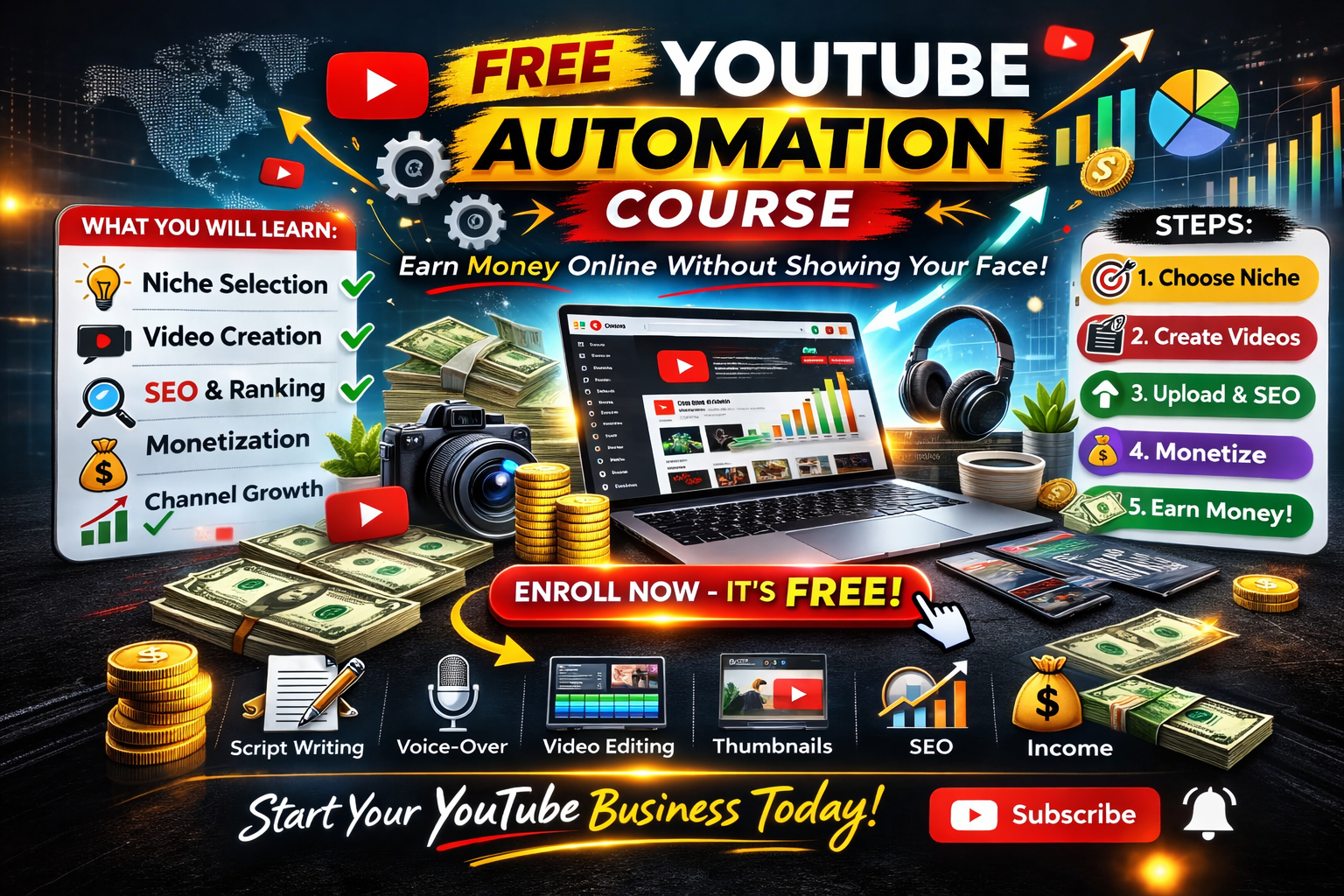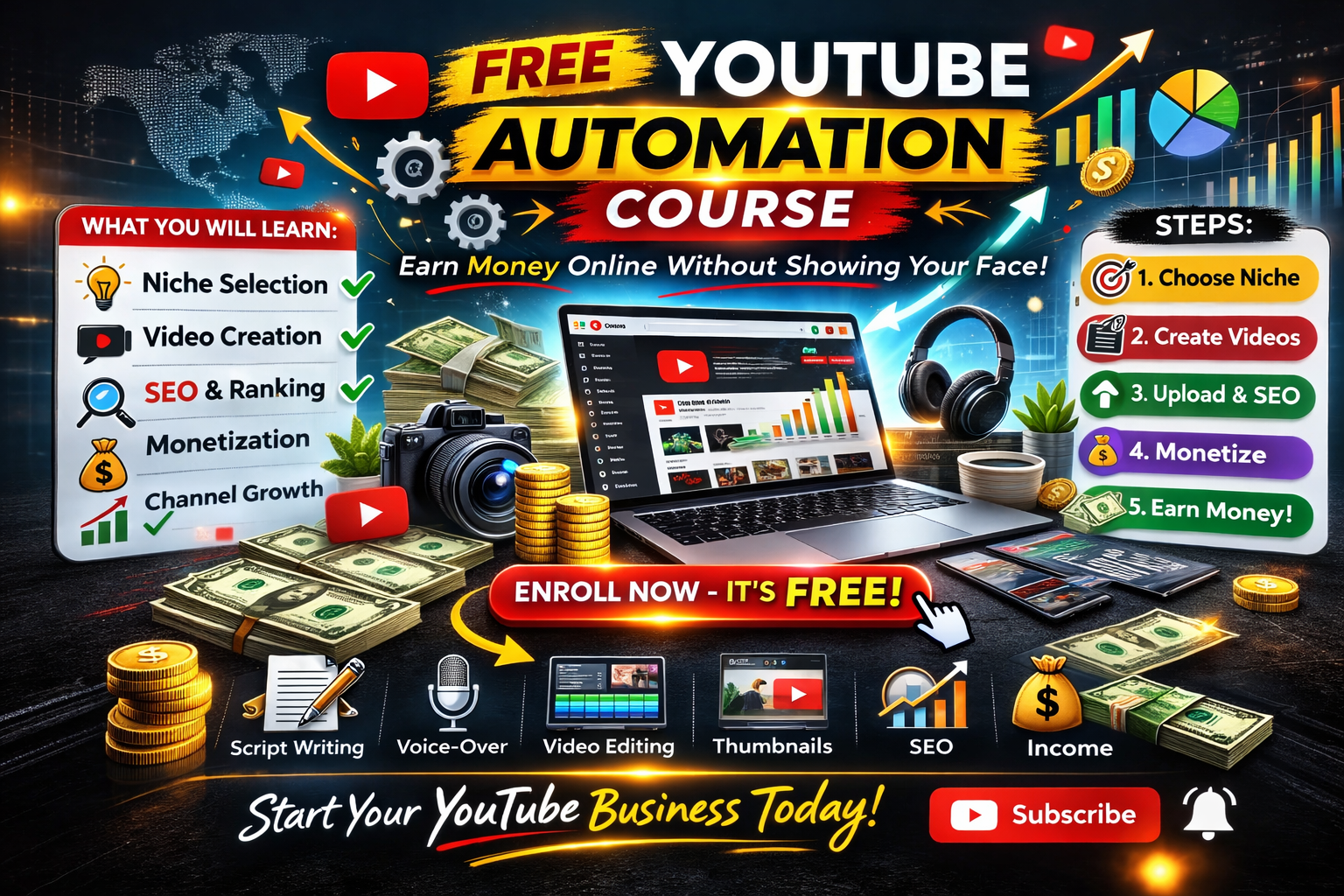
A YouTube automation course is becoming one of the most talked-about online business models today. It teaches students how to create and manage a YouTube channel without appearing on camera or recording videos themselves. Instead, the channel owner builds a small team of freelancers for scripting, voice-overs, editing, and thumbnail design. Platforms like YouTube allow creators to earn through advertising, brand deals, and affiliate marketing, which makes automation an attractive opportunity for beginners who want to start earning online.
What makes a YouTube automation course appealing is its focus on systems rather than talent. You don’t need to be a professional editor or a confident speaker. The course usually explains how to select profitable niches, research trending topics, optimize videos for search results, and consistently upload quality content. It also teaches monetization strategies such as joining the YouTube Partner Program, promoting affiliate products, or selling digital services. However, success requires patience, smart planning, and consistent uploads. While automation reduces personal workload, it still demands management skills and strategic thinking to build a sustainable and profitable channel.
YouTube automation course is designed to teach individuals how to build and manage a profitable YouTube channel without personally creating the videos. Instead of recording content, the channel owner hires freelancers for script writing, voice-overs, video editing, and thumbnail design. The main focus is on strategy, research, and management. Platforms like YouTube provide monetization opportunities through ads, sponsorships, and affiliate marketing, which makes this model attractive for students, freelancers, and online entrepreneurs who want to earn remotely.
A comprehensive YouTube automation course usually includes detailed training on niche research, competitor analysis, keyword optimization, and audience targeting. Students learn how to find low-competition, high-demand topics using SEO tools, how to create engaging titles and thumbnails that increase click-through rate (CTR), and how to improve audience retention for better algorithm performance. The course also explains YouTube’s monetization requirements, such as reaching 1,000 subscribers and 4,000 watch hours to qualify for the YouTube Partner Program. In addition, advanced modules may cover automation workflows, outsourcing strategies, copyright rules, fair use policies, and how to scale multiple channels at once.
Financially, starting a YouTube automation channel can require a small investment for freelancers and tools, but compared to traditional businesses, the startup cost is relatively low. Income potential depends on niche, CPM rates, audience location, and content quality. Some niches like finance, technology, and business often have higher ad revenue compared to entertainment or general content. However, success is not instant. It requires consistency, testing different formats, analyzing analytics, and improving content over time. With proper planning, patience, and smart execution, a YouTube automation course can help individuals build a long-term digital income stream rather than chasing short-term online trends.